



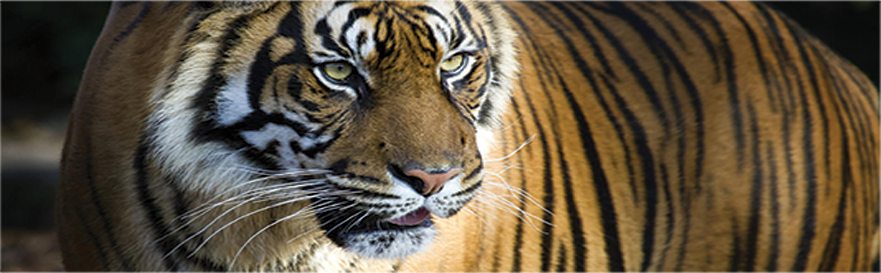
THREATS:
HABITAT LOSS:
Tigers have lost 93% of their historic range. Their habitat has been destroyed, degraded and fragmented by human activities, including the clearing of forests for agriculture and timber trade and development activities such as the building of road networks. Fewer tigers can survive in small, scattered islands of habitat, which lead to a higher risk of inbreeding. These small islands of habitat also make tigers more vulnerable to poaching.
HUMAN WILDLIFE CONFLICT:
People and tigers increasingly compete for space. The conflict threatens the world's remaining wild tigers and poses a major problem for communities living in or near tiger forests. As forests shrink and prey gets scarce, tigers are forced to hunt domestic livestock, which many local communities depend on for their livelihood. In retaliation, tigers are killed or captured. "Conflict" tigers are known to end up for sale in black markets. Local community dependence on forests for fuelwood, food and timber also heightens the risk of tiger attacks.
EFFECTS OF CLIMATE CHANGE:
One of the world's largest tiger populations is found in the Sundarbans-a large mangrove forest area shared by India and Bangladesh on the northern coast of the Indian Ocean. This area harbors Bengal tigers and protects coastal regions from storm surges and wind damage. However, rising sea levels caused by climate change threaten to wipe out these forests and the last remaining habitat of this tiger population. According to a WWF study, without mitigation efforts, projected sea level rise-cearly a foot by 2070-could destroy nearly the entire Sundarbans tiger habitat.
The largest of all the Asian big cats, tigers rely primarily on sight and sound rather than smell. They typically hunt alone and stalk prey. A tiger can consume up to 88 pounds of meat at one time. On average, tigers give birth to 2-3 cubs every 2-2.5 years. If all the cubs in one litter die, a second litter may be produced within 5 months.
Tigers generally gain independence at two years of age and attain sexual maturity at 3-4 years for females and at 4-5 years for males. Juvenile mortality is high however- about half of all cubs do not survive more than two years. Tigers have been known to reach the age of 26 years in the wild. Males of the largest subspecies, the Amur (Siberian) tiger, may weigh up to 660 pounds. For males of the smallest subspecies-the Sumatran tiger-upper range is at around 310 pounds. Within each subspecies, males are heavier than females.
Tigers are mostly solitary, apart from associations between mother and offspring. Individual tigers have a large territory and the size is determined mostly by the availability of prey. Although individuals do not patrol their territories, they visit over a period of days or weeks and mark their territory with urine and feces.Across their range, tigers face unrelenting pressure from poaching, retaliatory killings and habitat loss. They are forced to compete for space with dense and often growing human populations.
PLACES:
Amur-Heilong, Eastern Himalayas, Borneo and Sumatra, Greater Mekong
HABITATS:
Forest Habitat


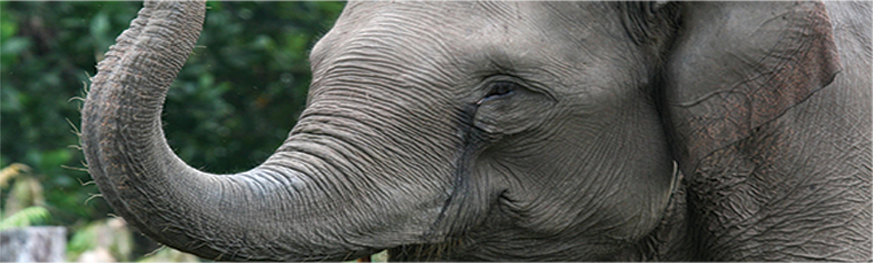
THREATS:
ILLEGAL WILDLIFE TRADE:
Even where suitable habitat exists, poaching remains a threat to elephants in many areas. In 1989, the Convention on International Trade in Endangered Species of Wild Fauna and Flora (CITES) banned the international trade in ivory. However, there are still some thriving but unregulated domestic ivory markets in a number of countries which fuel an illegal international trade. Although most of this ivory comes from poaching of African elephants, Asian elephants are also illegally hunted for their ivory, as well as for their skin. In some countries, political unrest is disrupting antipoaching activities.
GENETIC THREAT:
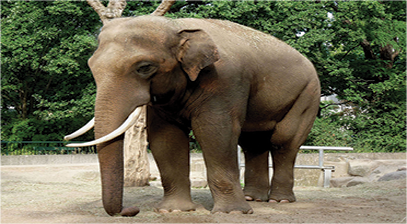
Conservationists are concerned that a loss of male big tuskers due to poaching could lead to inbreeding and eventually to high juvenile mortality and overall low breeding success. The loss of tuskers also reduces the probability that these longer-living lone males will mate and exchange genes with females of different sub-populations.
CAPTURE OF WILD ELEPHANTS:
The capture of wild elephants for domestic use has become a threat to some wild populations, seriously reducing some numbers. India, Vietnam and Myanmar have banned capture in order to conserve their wild herds, but in Myanmar elephants are still caught each year for the timber and tourist industries or illegal wildlife trade. Crude capture methods often result in elephant deaths. Efforts are being made not only to improve safety, but also to encourage captive breeding rather than taking from the wild. With nearly 30 percent of the remaining Asian elephants in captivity, attention needs to be paid to improve care and targeted breeding programs.
HABITAT LOSS:
The main threat facing Indian elephants, like all Asian elephants is loss of habitat, which then results in human-elephant conflict. In South Asia, an ever-increasing human population has led to many illegal encroachments in elephant habitat. Many infrastructure developments like roads and railway tracks also fragment habitat. Elephants become confined to "islands" as their ancient migratory routes are cut off. Unable to mix with other herds, they run the risk of inbreeding. Habitat loss also forces elephants into close quarters with humans. In their quest for food, a single elephant can devastate a small farmer's crop holding in a single feeding raid. This leaves elephants vulnerable to retaliatory killings, especially when people are injured or killed.
Elephants are an important cultural icon in Asia. According to Indian mythology, the gods (deva) and the demons (asura) churned the oceans in a search for the elixir of life so that they would become immortal. As they did so, nine jewels surfaced, one of which was the elephant. In Hinduism, the powerful deity honored before all sacred rituals is the elephant-headed Lord Ganesha, who is also called the Remover of Obstacles.
Asian elephants are extremely sociable, forming groups of six to seven related females that are led by the oldest female, the matriarch. Like African elephants, these groups occasionally join others to form herds, although these associations are relatively transient.
More than two thirds of an elephant's day may be spent feeding on grasses, but large amounts of tree bark, roots, leaves and small stems are also eaten. Cultivated crops such as bananas, rice and sugarcane are favorite foods. Elephants are always close to a source of fresh water because they need to drink at least once a day.
PLACES:
Himalayas, Greater Mekong
HABITATS:
Forest Habitat

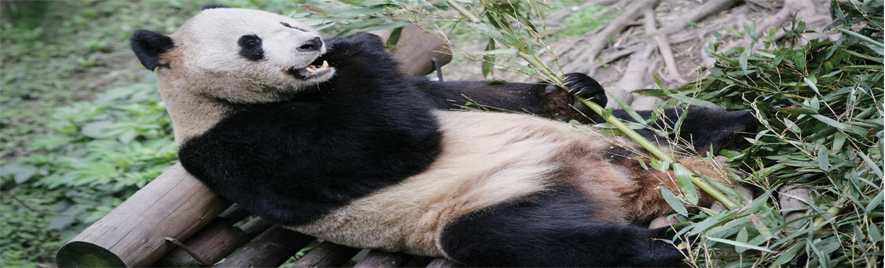
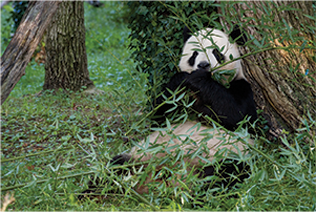
This peaceful creature with a distinctive black and white coat is adored by the world and considered a national treasure in China. The panda also has a special significance for WWF because it has been WWF's logo since our founding in 1961.
The rarest member of the bear family, pandas live mainly in bamboo forests high in the mountains of western China, where they subsist almost entirely on bamboo. They must eat from 26 to 84 pounds of it every day, a formidable task for which they use their enlarged wrist bones that function as opposable thumbs.
A newborn panda is about the size of a stick of butter-about 1/900th the size of its mother-but can grow to up to 330 pounds as an adult. These bears are excellent tree climbers despite their bulk.
PLACES:
Yangtze
HABITATS:
Mountains, Forest Habitat
THREATS:
HABITAT LOSS:
China's Yangtze Basin region, which holds the panda's primary habitat, is the geographic and economic heart of this booming country. Roads and railroads are increasingly fragmenting the forest, which isolates panda populations and prevents mating.Forest destruction also reduces pandas' access to the bamboo they need to survive. The Chinese government has established more than 50 panda reserves, but only around 61% of the country's panda population is protected by these reserves.
HUNTING:
Hunting remains an ever-present threat. Poaching the animals for their fur has declined due to strict laws and greater public awareness of the panda's protected status. But hunters seeking other animals in panda habitats continue to kill pandas accidentally.

THREATS:
HABITAT LOSS:
Bukit Barisan Selatan National Park in Sumatra is thought to have one of the largest populations of Sumatran rhinos, but it is losing forest cover due to conversion for coffee and rice by illegal settlers. In southern Zimbabwe, privately owned rhino conservancies have been invaded by landless people. This reduces the amount of safe habitat for rhino populations and increases the risk of poaching and snaring.
REDUCED GENETIC DIVERSITY:
The small size of the Javan rhino population is in itself a cause for concern. Low genetic diversity could make it hard for the species to remain viable.
NATURAL DISASTERS:
Ujung Kulon National Park, home to Javan rhinos, is highly vulnerable to tsunamis and a major explosion of the Anakx Krakatau volcano could easily wipe out all life in the protected area.
DISEASE:
In recent years four Javan rhinos, including one young adult female, are thought to have died from disease, probably transmitted to wild cattle in the park and subsequently to the rhinos.
ILLEGAL WILDLIFE TRADE:
Although international trade in rhino horn has been banned under the Convention on International Trade in Endangered Species of Fauna and Flora (CITES) since 1977, demand remains high and fuels rhino poaching in both Africa and Asia. Criminal syndicates link the killing fields in countries like South Africa through a whole series of transit points and smuggling channels on to the final destination in Asia. The main market is now in Vietnam where there is a newly emerged belief that rhino horn cures cancer. Rhino horn is also used in other traditional Asian medicine to treat a variety of ailments including fever and various blood disorders. It is also used in some Asian cultures as a cure for hangovers.
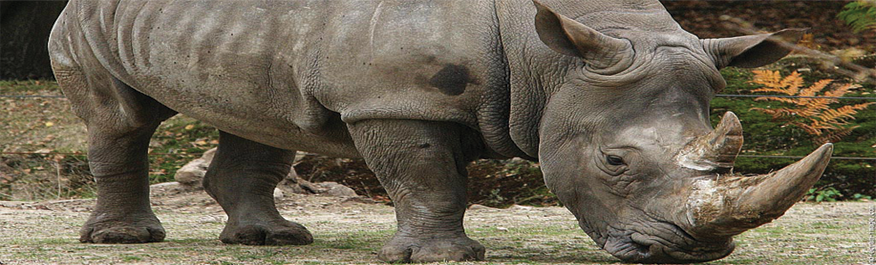
Rhinos once roamed many places throughout Eurasia and Africa and were known to early Europeans who depicted them in cave paintings. Long ago they were widespread across Africa's savannas and Asia's tropical forests. But today very few rhinos survive outside national parks and reserves. Two species of rhino in Asia-Javan and Sumatran-are Critically Endangered. A subspecies of the Javan rhino was declared extinct in Vietnam in 2011. A small population of the Javan rhino still clings for survival on the Indonesian island of Java.
Successful conservation efforts have helped the third Asian species, the greater one-horned (or Indian) rhino, to increase in number. Their status was changed from Endangered to Vulnerable, but the species is still poached for its horn.In Africa, Southern white rhinos, once thought to be extinct, now thrive in protected sanctuaries and are classified as Near Threatened. But the Northern white rhino subspecies is believed to be extinct in the wild and only a few captive individuals remain in a sanctuary in Kenya.
Black rhinos have doubled in number over the past two decades from their low point of 2,480 individuals, but total numbers are still a fraction of the estimated 100,000 that existed in the early part of the 20th century.
PLACES:
Namibia, Coastal East Africa, Borneo and Sumatra, Eastern Himalayas
